October was an exciting month for the PID Lab, with opportunities to share research, connect with colleagues, and explore how quantitative methods can address complex real-world challenges.
Modeling Crime and Violence in Complex Systems at SIAM NNP 2026
We kicked off this series of events at Rutgers University, where I organized a minisymposium titled “Modeling Crime and Violence in Complex Systems” as part of SIAM NNP 2026, held October 23–25.
Together with co-organizers Igor Belykh of Georgia State University and Maurizio Porfiri of New York University Tandon School of Engineering, we organized a minisymposium titled “Modeling Crime and Violence in Complex Systems”, bringing together researchers applying complex systems science, urban analytics, and causal inference to better understand crime and violence in the United States.
Dr. Ofek Lauber opened the session with research on statistical regularities and scaling relationships in crime across U.S. cities. Dr. Roni Barak Ventura presented our work combining urban scaling theory and causal inference to investigate the impact of the COVID-19 pandemic on firearm homicides among men and women. Dr. Kevin Slote then introduced a causal discovery framework for identifying the dynamics underlying firearm purchasing behavior. Martina Albarelli presented a synthetic control analysis of the effects of Extreme Risk Protection Order laws on homicide rates across U.S. states, and Aayush Chitransh discussed our work using staggered difference-in-differences methods to estimate the impact of commissioned street art on neighborhood crime in Newark, New Jersey.
These presentations highlighted how different analytical approaches can complement one another in studying complex social phenomena, connecting large-scale statistical patterns with causal mechanisms and intervention evaluation.
Healthcare and Medical Systems at MECC 2026
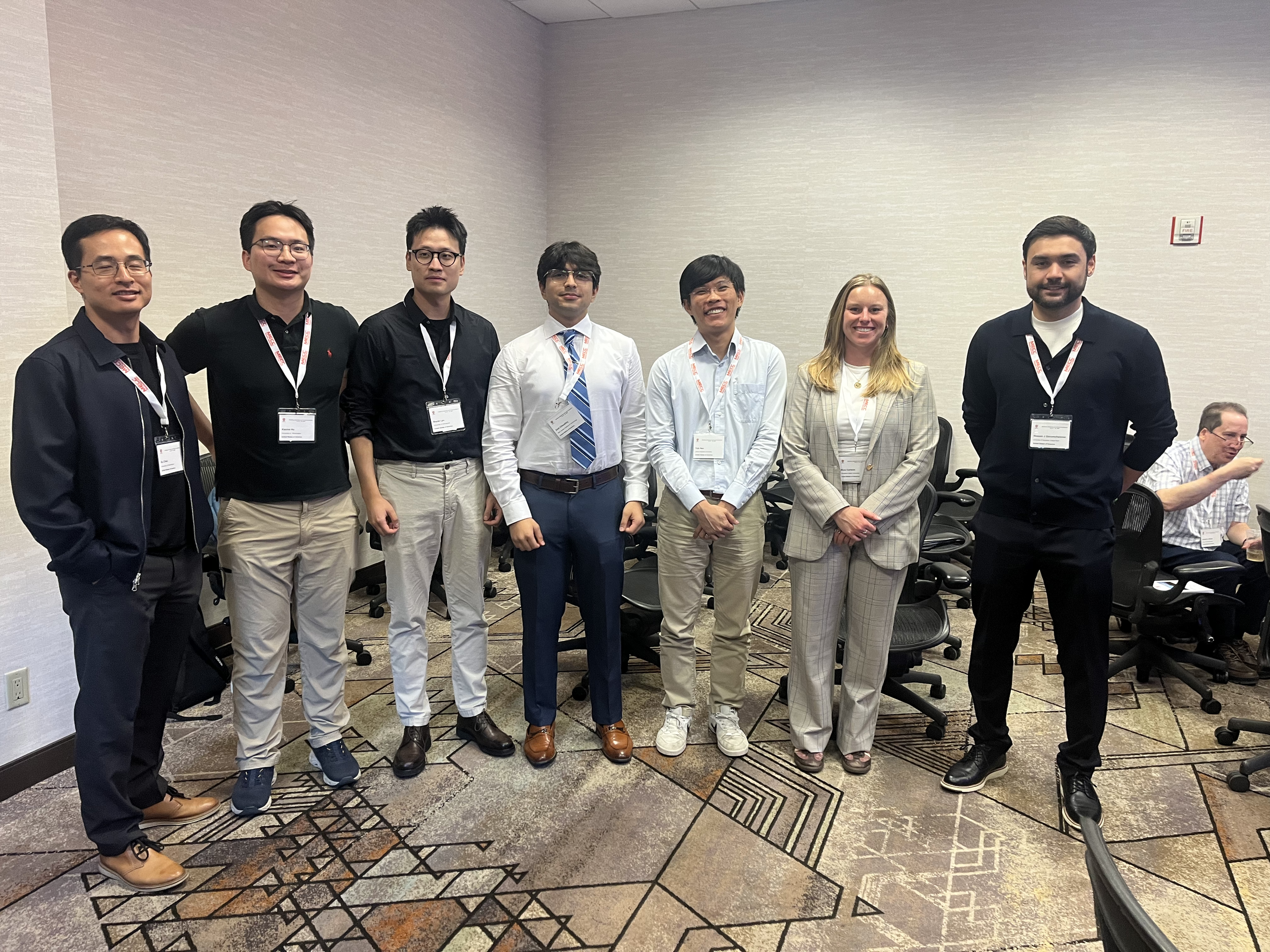
I had the pleasure of chairing the Healthcare and Medical Systems session at the Modeling, Estimation and Control Conference (MECC 2026) in Tempe, Arizona, alongside Dr. Jin-Oh Hahn.
The session featured a wonderfully diverse program showcasing applications of modeling, estimation, and control methods to healthcare challenges. Presentations covered topics ranging from estimating ground reaction forces using wearable sensors to analyzing interactions between closed-loop critical care devices.
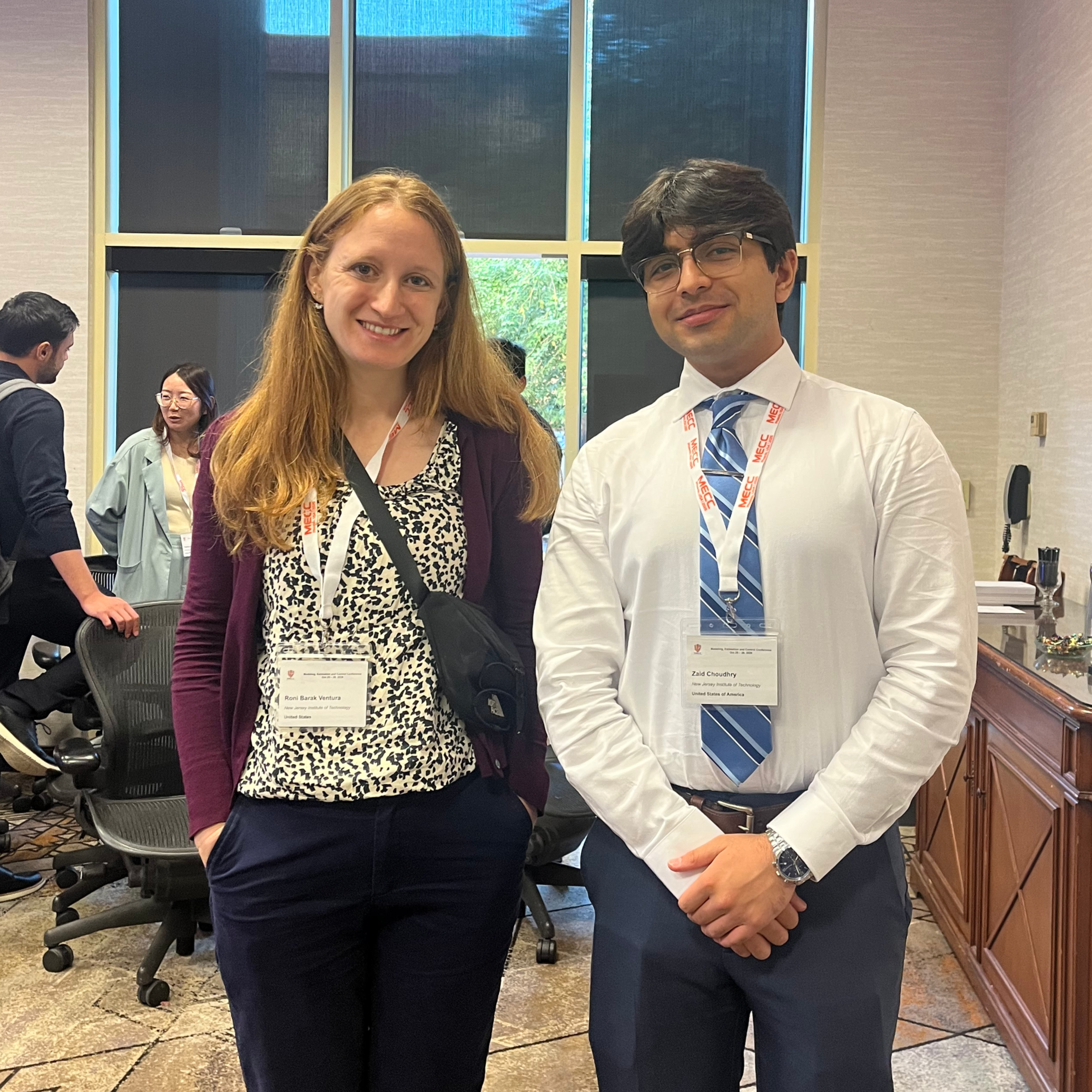
Other contributions explored model predictive control for rehabilitation systems, digital training platforms for robotic vitreoretinal surgery, and trajectory optimization for rehabilitation exoskeletons. In particular, Zaid Choudhry presented his work with Hana Ighneim on detecting compensatory movements during upper-limb rehabilitation using camera sensors. The diversity of these presentations illustrated how engineering principles can support advances in rehabilitation, medical robotics, physiological monitoring, and clinical care.
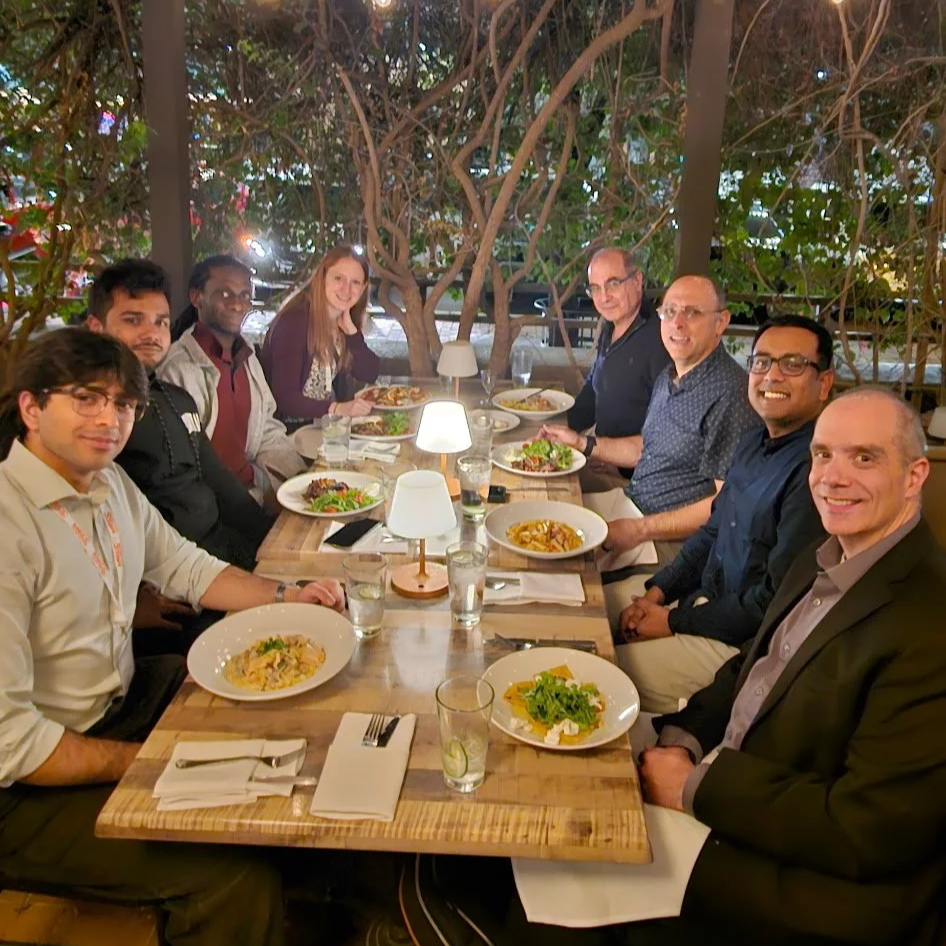
Beyond the technical sessions, the conference was also an opportunity to reconnect with colleagues, and we enjoyed informal conversations about academic life, science, creating opportunities to exchange ideas, strengthening professional relationships, and identifying potential directions for future collaboration.