Celebrating Innovation at the 2026 Spring YWCC Capstone Showcase
Last Sunday, students from the PID Lab presented an exciting range of projects at the YWCC Capstone Showcase, highlighting the creativity, technical expertise, and interdisciplinary collaboration that define our work. Co-mentored with Margarita Vinnikov, three student teams represented the lab with projects focused on technology-driven solutions for healthcare, rehabilitation, and immersive interaction design.
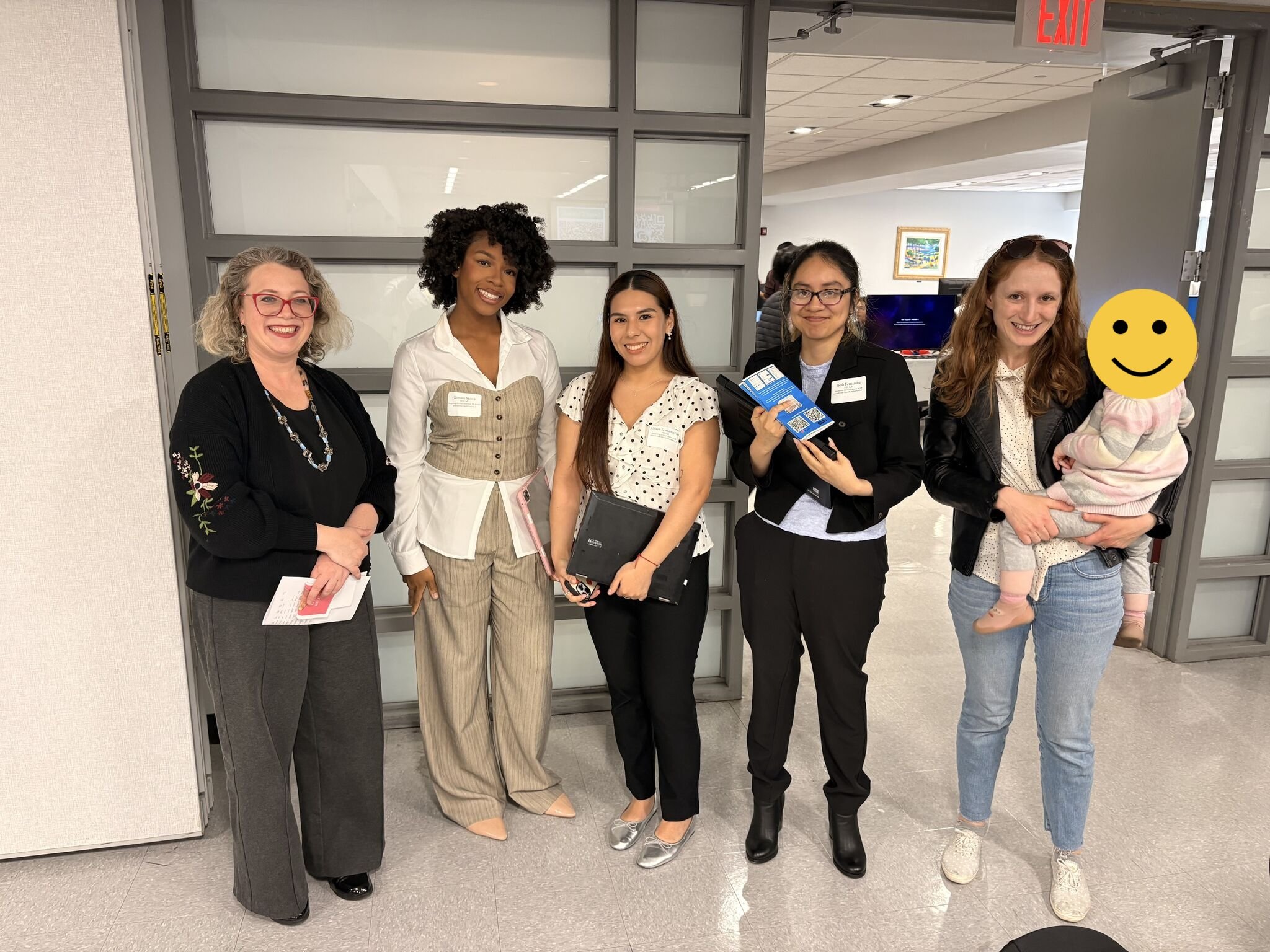
One team — Allison Gamarra, Kimora Stowe, and Ibeth Fernandez — developed an interface to support the telerehabilitation of plantar fasciitis. Their project focused on improving accessibility and usability for patients receiving remote care, demonstrating how thoughtful digital design can enhance rehabilitation experiences and expand access to treatment.
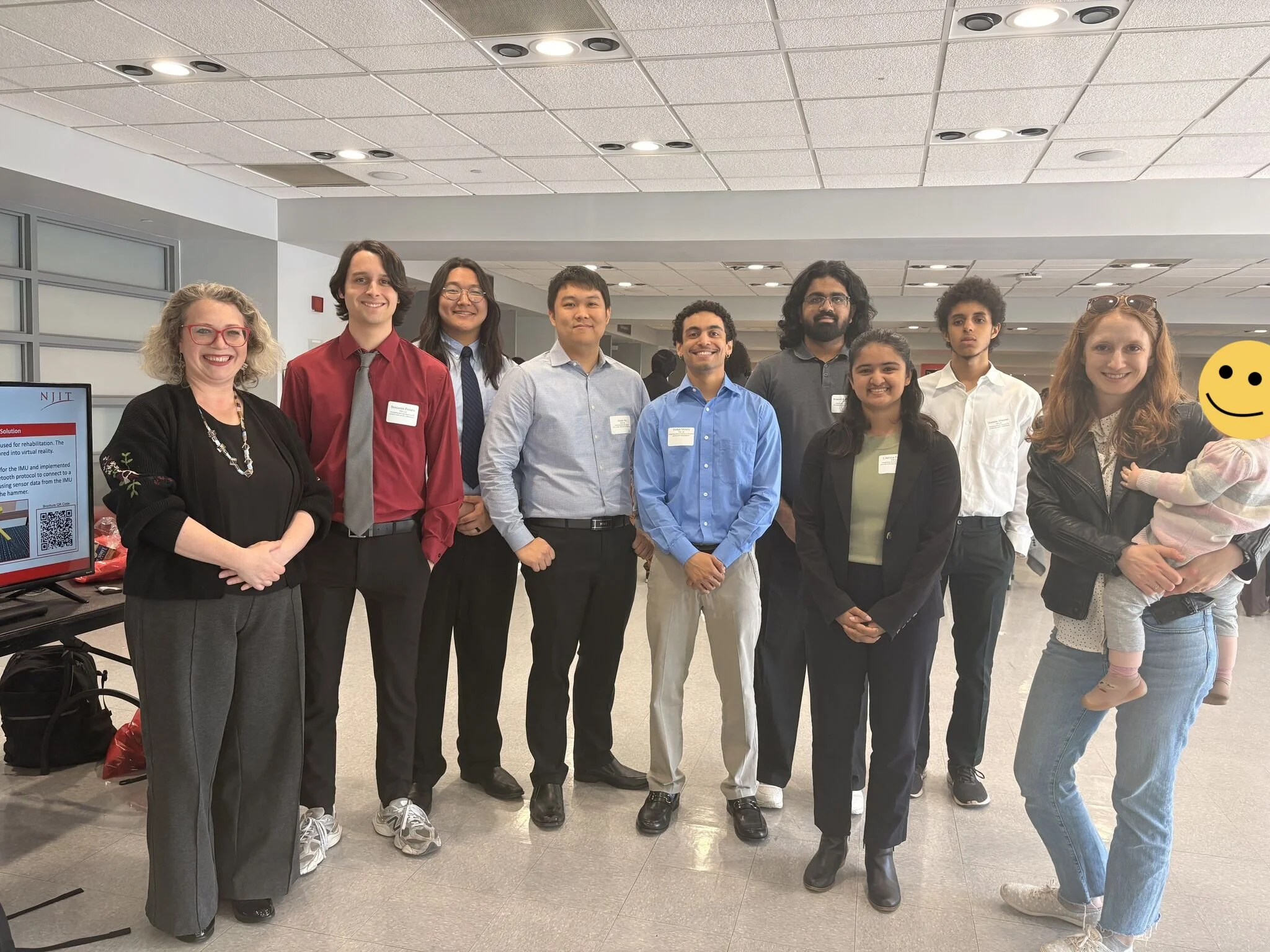
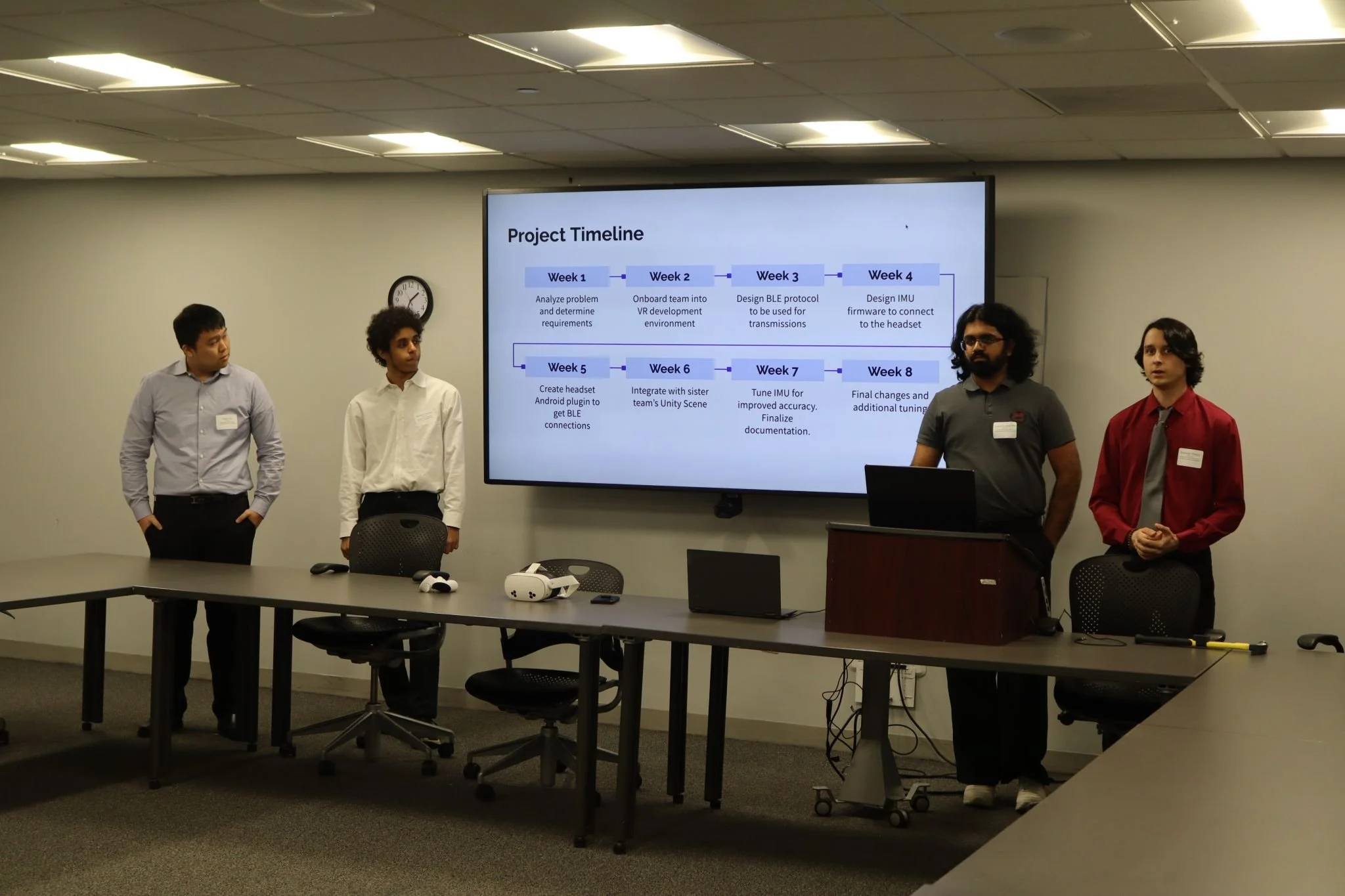
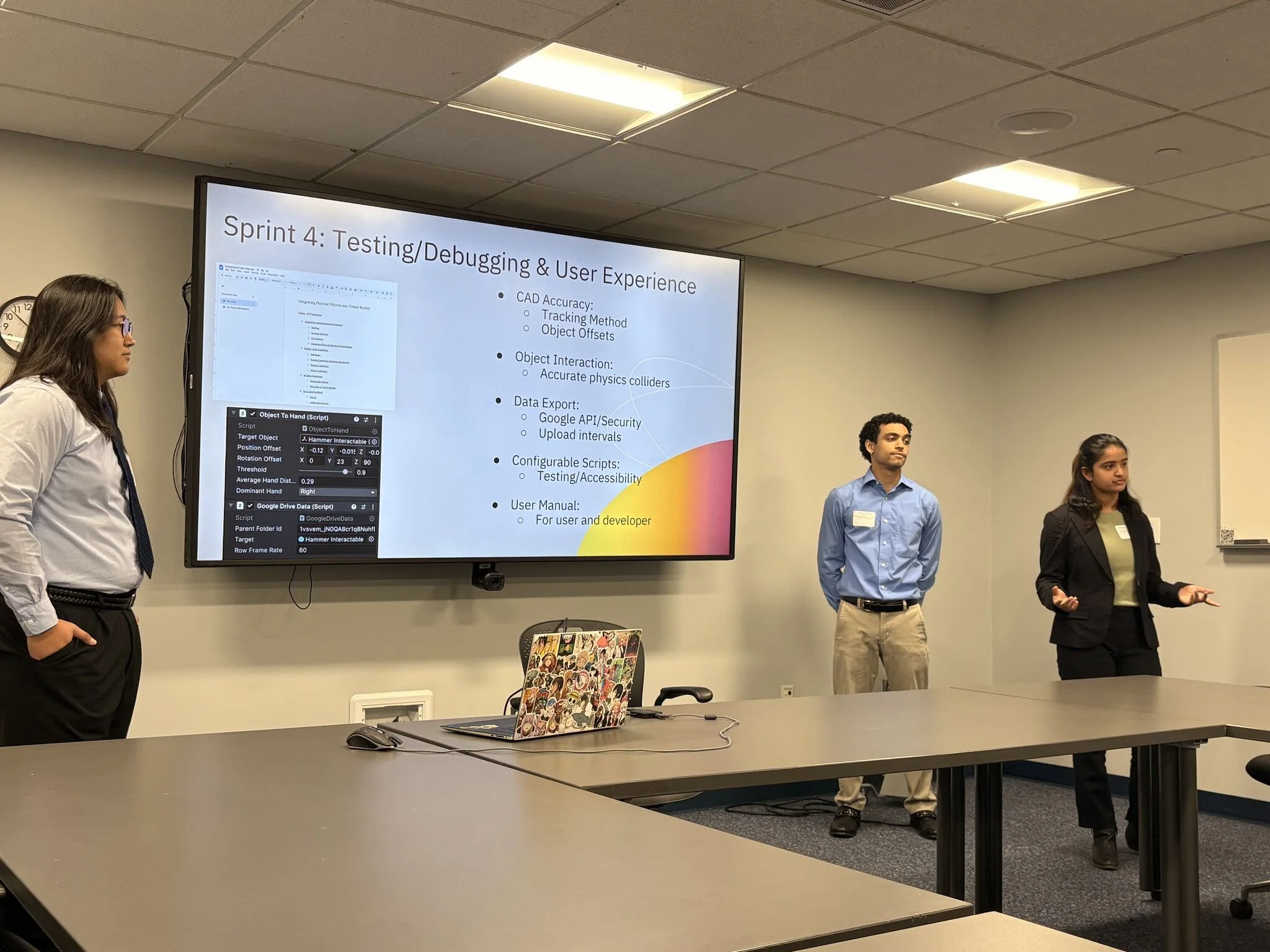
Two additional teams explored the integration of physical objects into virtual reality environments to support task-specific rehabilitation and manual skill training. The first team — Avanish Kulkarni, Benjamin Porreca, Dominic Attalienti, and James An — incorporated inertial sensor data into virtual reality systems to enable real-time tracking of object movement. Their work demonstrated the potential of combining sensing technologies with immersive environments to create more responsive and effective rehabilitation tools. The second team — Clarissa Furtado, Ewan Lee, and Jordan Mosley — investigated digit tracking techniques that allow users to interact naturally with physical objects in virtual environments. Their project explored new possibilities for intuitive, hands-on interaction in VR-based training and rehabilitation applications.
The showcase also brought well-deserved recognition for several students’ outstanding contributions: Allison, Kimora, and Ibeth’s project earned an impressive third-place finish among 81 teams! In addition, Ewan Lee was recognized as the Capstone Most Valuable Player, while Allison Gamarra received the first-place Marketing Award.
We are incredibly proud of all the students for their hard work, innovation, and commitment to developing meaningful technologies that address real-world challenges in healthcare and human-computer interaction. Their projects exemplify the impact that interdisciplinary collaboration and user-centered design can have on emerging technologies.